
Your workout is only part of the muscle-building process. What you eat after training helps provide the protein, carbohydrates, fluids and micronutrients your body needs for recovery.
For resistance training, a practical target is around 20–40 g of high-quality protein in a meal, depending on body size and the rest of your diet. Protein intake spread across the day is more important than obsessing over a tiny “post-workout window.”
After a hard or long workout, carbohydrates can also help replenish glycogen, while fluids and electrolytes help replace what was lost through sweat.
Here are 5 simple vegetarian Indian post-workout meals that can work for muscle gain, strength training and general fitness
1. Paneer + Rice + Curd
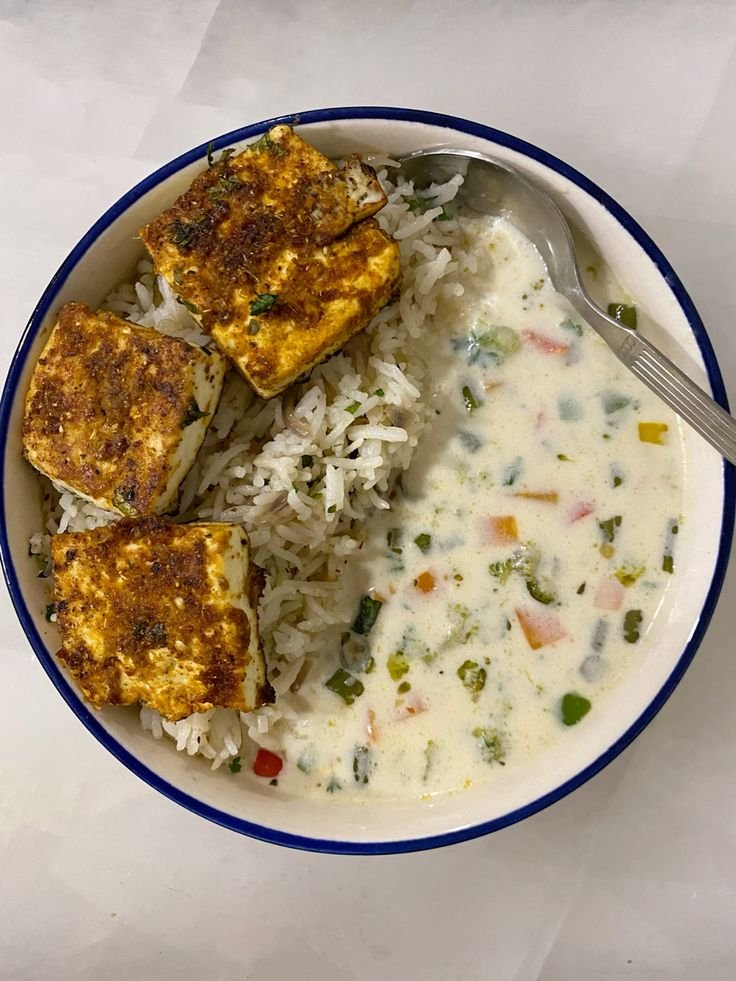
Best for:
Muscle gain, strength training and hard evening workouts
Suggested serving
- 150 g low-fat paneer
- 200–250 g cooked rice
- 100 g curd
- Vegetables/salad according to tolerance
Approximate nutrition
| Nutrient | Approx. amount |
|---|---|
| Calories | ~600–700 kcal |
| Protein | ~35–40 g |
| Carbohydrates | ~65–75 g |
| Fat | ~20–25 g |
| Fiber | ~3–6 g |
Values vary significantly depending on paneer type and cooking oil.
Benefits
- High-quality protein from paneer and curd
- Rice provides carbohydrates for glycogen replenishment
- Good calorie option for people trying to gain muscle
- Provides calcium and other micronutrients
- A complete meal rather than just a protein snac
Disadvantages
- Full-fat paneer can make the meal quite high in fat
- Large portions may feel heavy
- Dairy can cause bloating in people with lactose intolerance or dairy sensitivity
- Not the best choice immediately before another intense activity
Practical digestion/timing
Allow approximately 2–4 hours for a large meal like this to feel comfortable for most people.
If you’re eating it after training, there is usually no need to rush it down immediately. You can comfortably have it during your normal post-workout meal period.
Best for
🌙 Evening workouts: Excellent
🌅 Morning workouts: Good if you have enough time for a full meal
2. Tofu + Rice Bowl
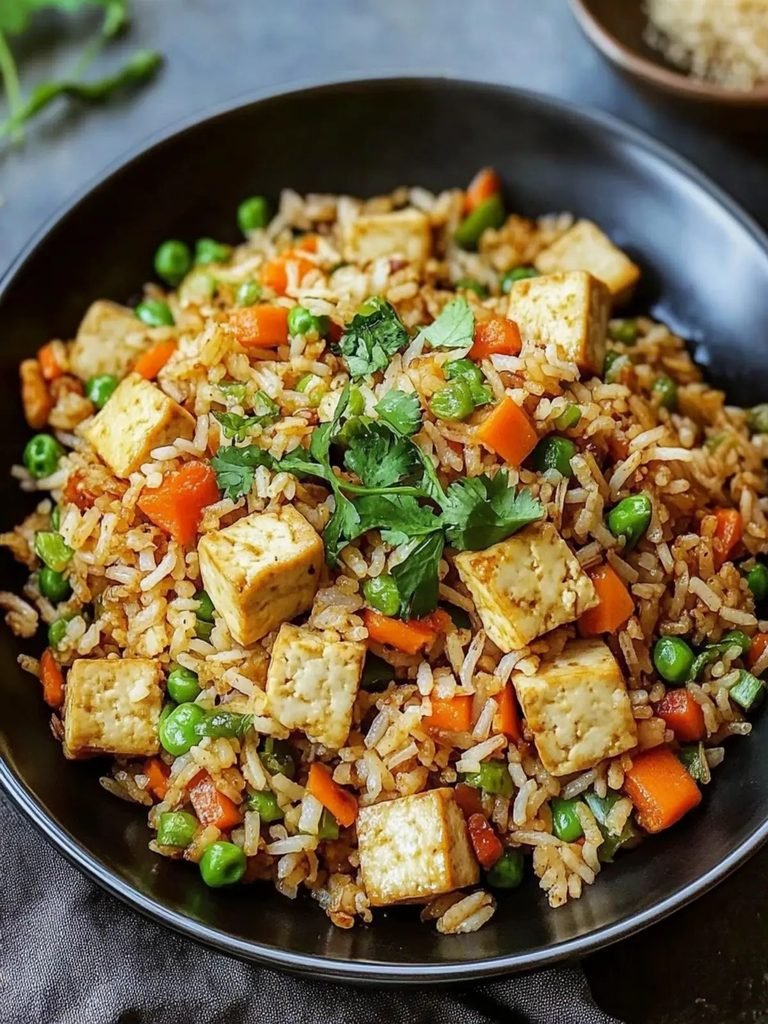
Best for:
Vegetarians looking for a dairy-free post-workout meal
Suggested serving
- 200 g firm tofu
- 200–250 g cooked rice
- 100–150 g cooked vegetables
- 1 tsp oil
- Optional lemon, herbs and spices
Approximate nutrition
| Nutrient | Approx. amount |
|---|---|
| Calories | ~500–600 kcal |
| Protein | ~30–35 g |
| Carbohydrates | ~65–75 g |
| Fat | ~15–20 g |
| Fiber | ~5–8 g |
Tofu nutrition varies considerably between brands and firmness.
Benefits
- Good plant-based protein source
- Rice provides easily available carbohydrates
- Dairy-free
- Provides minerals such as calcium depending on the tofu used
- Easy to customize for cutting or bulking
Disadvantages
- Protein content varies substantially between tofu products
- Some people experience bloating from soy
- A very large vegetable portion can make the meal bulky
- More protein may be required if your particular tofu is relatively low in protein
Practical digestion/timing
A moderate serving can be used as a 1.5–3 hour post-workout meal, depending on portion size and individual tolerance.
Best for
🌅 Morning: Excellent
🌙 Evening: Excellent
3. Soy Chunk Pulao + Curd
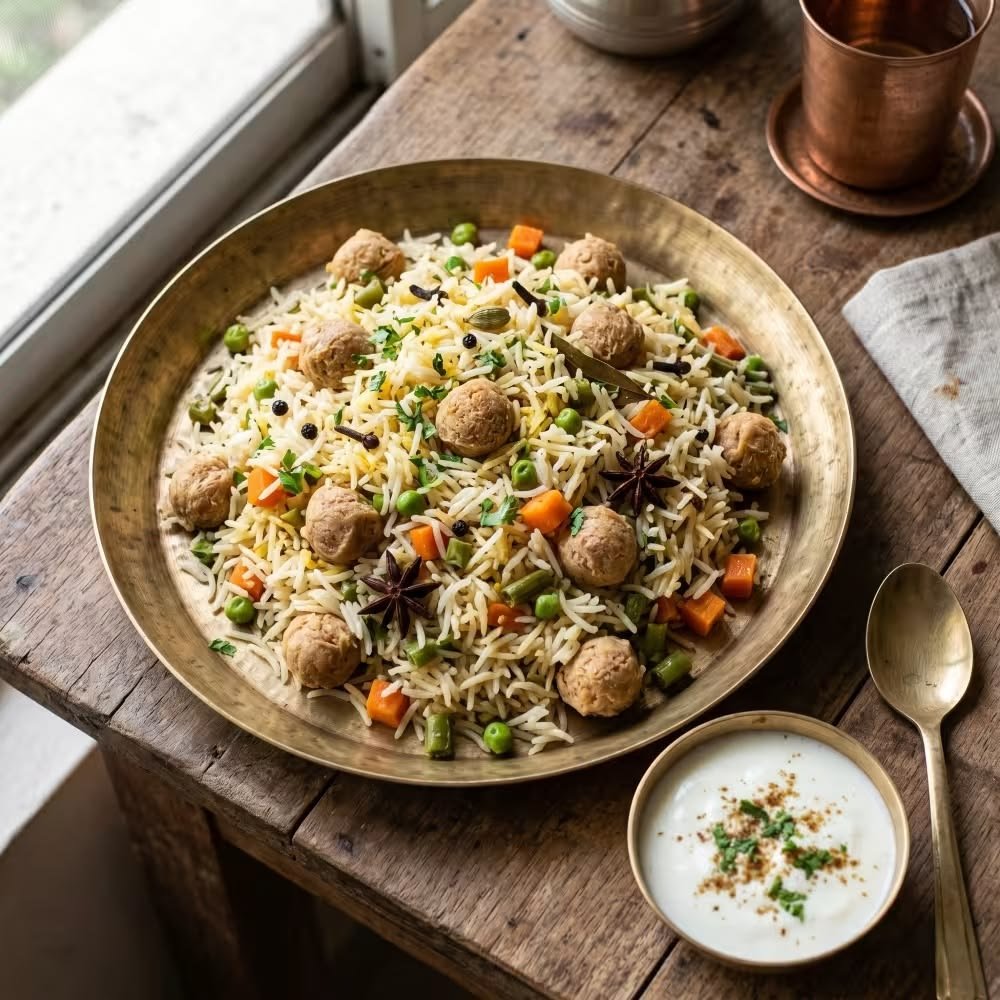
Best for:
High-protein vegetarian muscle-building diets
Suggested serving
- 50 g dry soy chunks, cooked
- 200–250 g cooked rice
- Vegetables
- 100 g low-fat curd
Approximate nutrition
| Nutrient | Approx. amount |
|---|---|
| Calories | ~450–550 kcal |
| Protein | ~30–35 g |
| Carbohydrates | ~65–75 g |
| Fat | ~5–10 g |
| Fiber | ~8–12 g |
Benefits
- High protein for relatively few calories
- Excellent option for vegetarians
- Rice provides carbohydrates after training
- High satiety
- Useful during a calorie-controlled diet
Disadvantages
- Soy chunks can cause gas or bloating in some people
- Large quantities may be difficult to digest
- Not everyone likes the texture
- Increase the serving gradually if you don’t normally eat soy
Practical digestion/timing
Because soy chunks and vegetables contain more fiber, allow roughly 2–3 hours if you find them heavy.
Best for
🔥 Muscle gain: Excellent
🔥 Fat loss: Excellent with controlled rice/oil portions
🌅 Morning: Good if your stomach tolerates soy
🌙 Evening: Excellent
4. Greek Yogurt + Oats + Banana
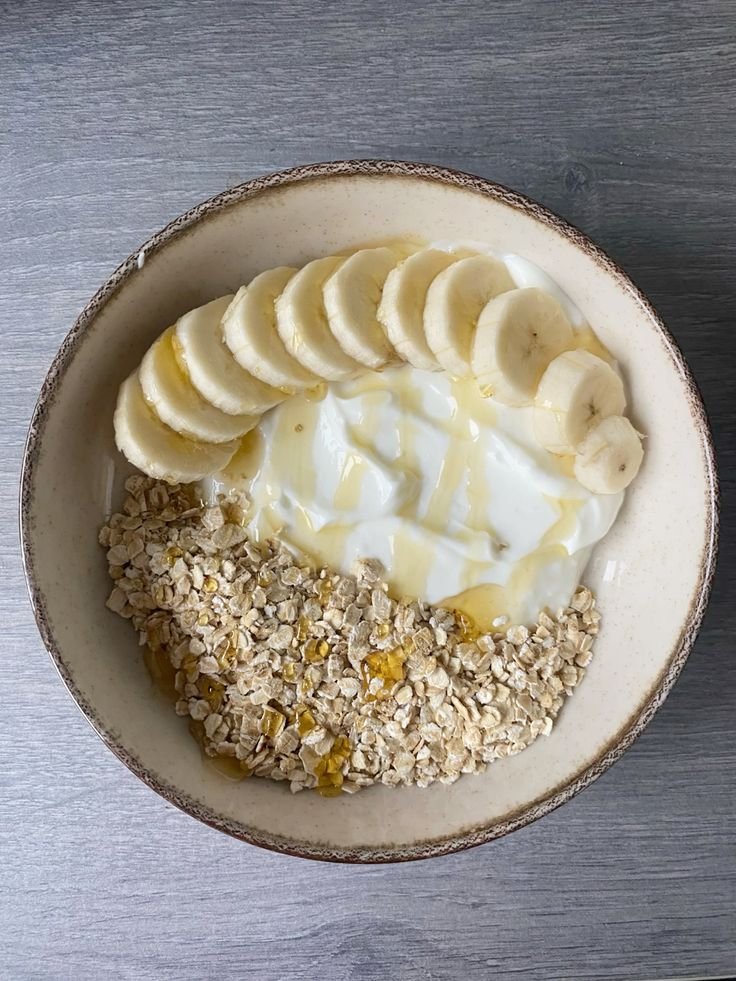
Best for:
A quick post-workout meal, especially after morning training
Suggested serving
- 250 g Greek yogurt / high-protein yogurt
- 50–60 g oats
- 1 banana
- Optional cinnamon or a small amount of nuts
Approximate nutrition
| Nutrient | Approx. amount |
|---|---|
| Calories | ~400–500 kcal |
| Protein | ~25–35 g |
| Carbohydrates | ~55–70 g |
| Fat | ~5–10 g |
| Fiber | ~6–9 g |
Choose a high-protein yogurt and check the label because protein content varies significantly between products.
Benefits
- Convenient and quick to prepare
- Good combination of protein + carbohydrates
- Banana provides carbohydrates and potassium
- Oats provide carbohydrates and fiber
- Easy option when you don’t want a heavy meal
Disadvantages
- Some people don’t tolerate dairy well
- Too much oats immediately after training can feel heavy
- Nuts increase calories and fat quickly
- Not ideal if you need a very large calorie/protein meal
Practical digestion/timing
This is generally a moderate-sized meal. Many people can comfortably eat it within 1–2 hours after training.
Best for
🌅 Morning workout: ⭐ Excellent
🌙 Evening workout: Very good
5. Whey + Banana + Peanut Butter Oats
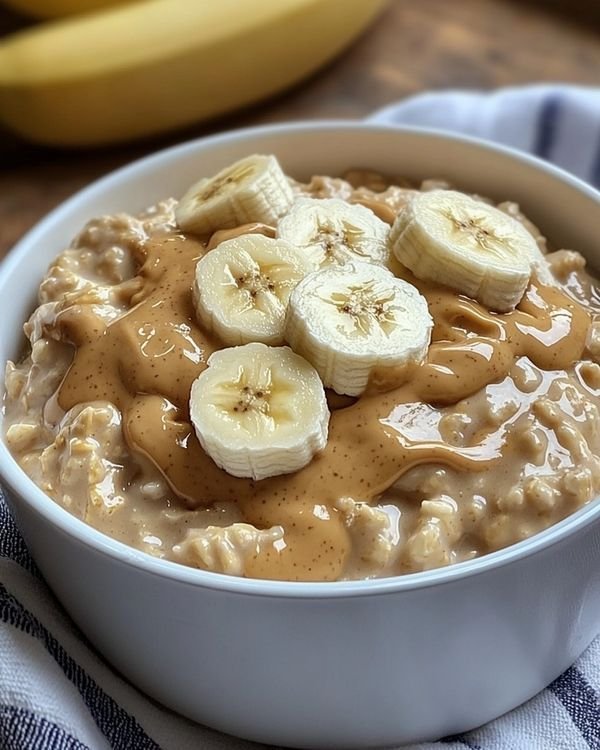
Best for:
When you need something quick after training
Suggested serving
- 1 scoop whey protein
- 1 medium banana
- 40–50 g oats
- 10–15 g peanut butter
- Water or milk according to your calorie needs
Approximate nutrition
| Nutrient | Approx. amount |
|---|---|
| Calories | ~400–500 kcal |
| Protein | ~30–35 g |
| Carbohydrates | ~50–60 g |
| Fat | ~8–12 g |
| Fiber | ~5–7 g |
Benefits
- Convenient when you don’t have time to cook
- Easily reaches a useful protein dose
- Banana + oats provide carbohydrates
- Easy to adjust for cutting or bulking
- Useful immediately after morning training when you need breakfast quickly
Disadvantages
- Whey is a supplement, not a replacement for a varied diet
- Some people experience bloating from whey or lactose
- Peanut butter increases calories quickly
- Too much fat can make it slower to digest
Practical digestion/timing
A shake-based meal is generally easier to consume than a large solid meal. Around 1–2 hours is a practical window before your next substantial meal, depending on portion size and individual tolerance.
Best for
🌅 Morning workout: ⭐ Excellent
🌙 Evening workout: Excellent
Morning vs Evening: Which Meal Should You Choose?
The food does not need to change dramatically just because you train at a different time of day. Your total daily calories and protein matter much more.
🌅 If You Train in the Morning
You may have gone several hours without food overnight.
Quick option:
Whey + banana + oats
Full breakfast:
Greek yogurt + oats + banana
If you have more time:
Tofu + rice
A liquid or relatively light meal can be convenient if you don’t feel like eating a large breakfast immediately after waking.
If You Train in the Evening
You have usually eaten several meals already, so your post-workout meal can simply become your dinner.
Great options:
Paneer + rice + curd
or
Soy chunks + rice + curd
or
Tofu + rice + vegetables
You don’t need to avoid carbohydrates at night simply because you’re eating them after an evening workout. Your overall calorie intake and nutritional needs matter more.
Post-Workout Precautions
1. Don’t obsess over the “30-minute anabolic window”
You don’t need to panic if you don’t eat within 30 minutes of finishing your last set.
Post-exercise protein feeding supports muscle protein synthesis, but the importance of the exact timing depends partly on what and when you ate before training.
2. Aim for enough protein
A practical meal target is approximately 20–40 g protein, depending on your body size and total daily intake. ISSN’s position stand describes 20–40 g per feeding as a useful range for stimulating muscle protein synthesis in many exercising adults.
3. Don’t forget carbohydrates
After hard or long training, carbohydrates help replenish glycogen stores. This becomes particularly important if you train again soon or have another demanding session.
4. Replace fluids
If you sweat heavily, don’t replace only water—your overall electrolyte intake also matters, particularly sodium.
5. Don’t make every post-workout meal extremely high in fat
A huge amount of:
- Ghee
- Butter
- Cheese
- Peanut butter
- Fried food
can make a meal much more calorie-dense and may make it feel heavy.
6. Watch your individual tolerance
If paneer, curd, whey or soy consistently causes:
- Bloating
- Gas
- Stomach cramps
- Diarrhea
choose another protein source or reduce the portion.
Quick Post-Workout Meal Guide
| Meal | Protein | Carbs | Best Use |
|---|---|---|---|
| 🧀 Paneer + Rice + Curd | ~35–40 g | ~65–75 g | Bulking / hard training |
| 🌱 Tofu + Rice | ~30–35 g | ~65–75 g | Dairy-free |
| 🫘 Soy Chunks + Rice + Curd | ~30–35 g | ~65–75 g | High-protein / cutting |
| 🥣 Greek Yogurt + Oats + Banana | ~25–35 g | ~55–70 g | Morning workouts |
| 🥛 Whey + Banana + Oats | ~30–35 g | ~50–60 g | Quick recovery meal |
💡 The Simple Formula
For most resistance-training sessions:
PROTEIN + CARBS + FLUIDS = RECOVERY
Choose a protein-rich vegetarian food, add carbohydrates according to your training and calorie needs, replace fluids, and then continue eating normally throughout the day.
You don’t need a “perfect” post-workout meal. You need a consistent diet that provides enough total protein, calories and micronutrients to support your goal.